Professional Tree Treatments in Austin and Surrounding Areas
At A Good Morning Tree Service, we provide a full range of tree treatments in Austin and Central Texas. For over 20 years, we have been providing commercial and residential tree services to countless property owners in the area. If you suspect that one of your trees has a disease or infestation, contact us for a tree assessment and tree treatment (if necessary).
Treatment options depend on the tree species, the suspected bacteria, the time of year, and the location of the symptoms. In addition to applying an appropriate product, we may recommend pruning affected material, improving air circulation, reducing plant stress, and correcting watering or soil problems.
Bacterial symptoms can resemble fungal disease or insect damage, so an accurate evaluation is an important first step.
Emerald Ash Borer Treatment
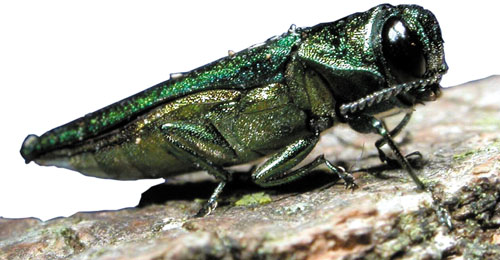
Emerald_ash_borer_3_-Flickr-_USDAgov.jpg by USDAgov
Licensed under the Creative Commons Attribution 2.0 Generic license.
The Emerald Ash Borer (EAB) has been identified in central Texas. Without intervention, infested ash trees typically die within two to five years of infestation.
If you suspect your ash tree has been infested, contact us for a professional arborist evaluation. We can also apply insecticidal treatments to help protect high-value ash trees, when EABs have been identified in the area.
This article from Texas A&M AgriLife has more information about the current central Texas ash borer threat: Spread of emerald ash borer continues in Texas
Oak Wilt Treatment
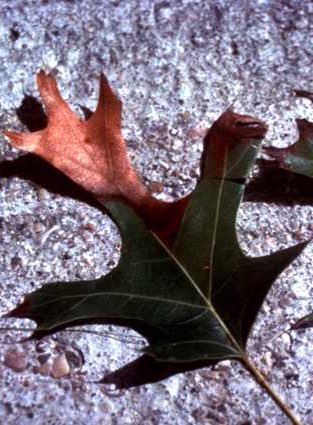
Photo credit: texasoakwilt.org
If there is oak wilt in your area, we want you to know that you can take preventative measures! Let our professional crews alleviate your concerns with a diagnostic checkup and treatment options for your trees.
Fire Blight Treatment
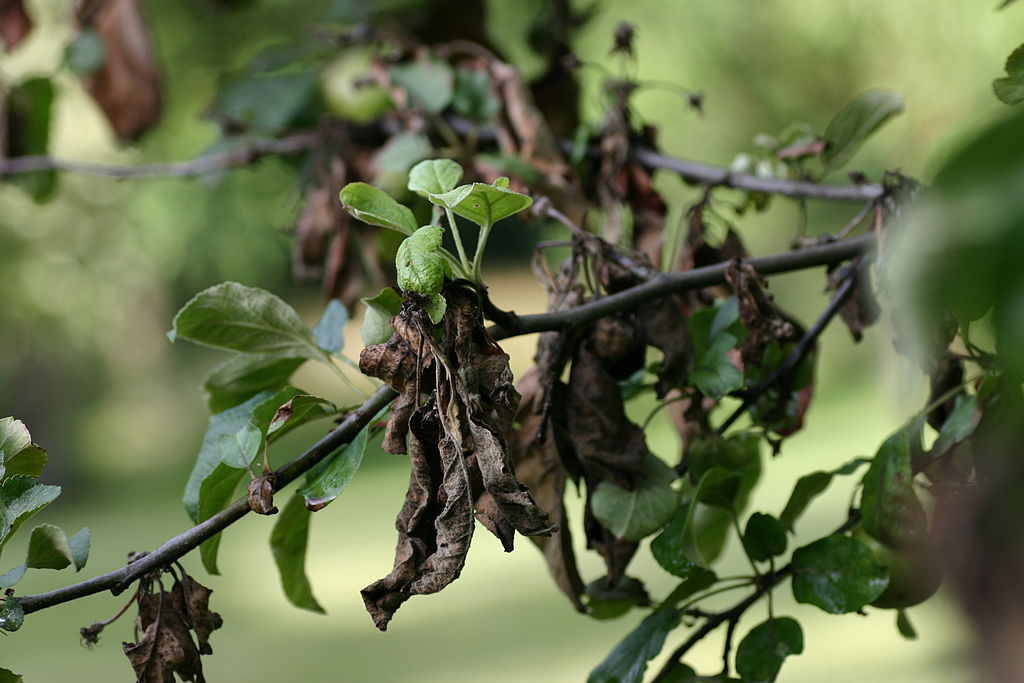
Fire blight is a bacterial infection affecting trees in the rosaceous family, including: crabapple, apple, pear, mountain ash, and cotoneaster trees. It is caused by the erwinia amylovora bacteria. Fire blight is a destructive disease that kills the tree’s leaves, blossoms, stems, and sometimes – if left untreated – the entire tree.
Treatment consists of first carefully pruning and removing the infected branches – the infected branches and foliage must be removed from your property so they do not reinfect your tree, or infect neighboring trees. Next we treat the infected tree with injections of a systemic antibiotic.
If treatment is started soon after you first notice the signs of fire blight, your tree has a good chance of full recovery. Prompt treatment will also decrease the likelihood of the infection spreading to nearby trees. It is important to not delay treatment of an infected tree. If the infection reaches your tree’s roots, it will die.
Fall Webworm Prevention and Treatment
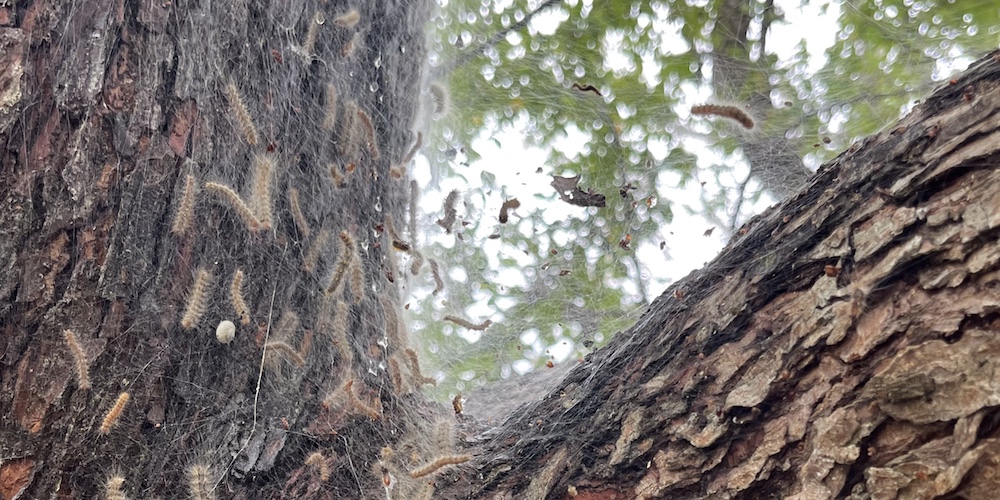
The fall Webworm (Hyphantria cunea) is a moth, known primarily for its larval stage.
In the late summer and early fall, the webworms create unsightly webbed nests on a variety of hardwood tree limbs.
We manage webworm with Arborjet injections – like a shot for your tree. As the worms continue consuming the tree, the medicine will kill them off. Unlike spray pesticides, the injection treatment is not harmful to pets or children.
Customized Tree Health Treatments
No two trees have the same needs. Our certified arborists inspect each tree and consider its species, age, soil, root zone, symptoms, and growing conditions before recommending fertilization or treatment.
Depending on the evaluation, your tree may benefit from soil injections, deep root fertilization, bark sprays, soil drenches, fungicides, insecticides, antibacterial treatments, or a combination of services. Our goal is to address the underlying cause of decline and support the tree’s long-term health.
Soil Injections
Soil injections deliver nutrients, micronutrients, and other treatments directly into the root zone, where your tree can use them most effectively. This application method helps improve soil conditions and supports stronger root development without placing fertilizer on the surface of your lawn or landscape.
Our certified arborists evaluate the tree, soil, root zone, and surrounding environment before selecting the appropriate product and application rate. Soil injections may be recommended for trees showing signs of nutrient deficiencies, poor growth, drought stress, or declining vitality.
Bark Spray Treatments
Bark sprays allow carefully selected treatments to be applied directly to the tree’s trunk and branches. Depending on the tree’s condition, bark applications may help address certain insect problems, nutrient deficiencies, or disease-related concerns.
This treatment is applied with attention to the tree species, season, weather conditions, and surrounding landscape. Our team uses professional products and follows label instructions to help protect your trees while minimizing unnecessary treatment.
Soil Drenches
Soil drenches apply a diluted treatment to the soil around a tree’s root zone. The material is absorbed through the soil and taken up by the roots, allowing nutrients or targeted treatments to move into the tree’s vascular system.
A soil drench may be recommended when a tree needs supplemental nutrients or treatment for a specific insect or disease concern. Proper application is important because the amount and placement of the treatment must be matched to the tree’s size, species, health, and soil conditions.
Deep Root Fertilization
Deep root fertilization places nutrients below the surface and throughout the tree’s active root zone. This approach helps deliver fertilizer where tree roots can access it while reducing surface runoff and competition from turfgrass.
Deep root fertilization may benefit mature trees, trees growing in compacted soil, and trees experiencing nutrient deficiencies, drought stress, or reduced growth. We use a customized treatment plan based on the tree’s condition and the results of our on-site evaluation.
Fungicide Treatments
Fungal diseases can affect leaves, branches, roots, and the overall structure of a tree. Fungicide treatments may help manage certain diseases when they are correctly identified and applied at the appropriate time.
Our arborists inspect the tree for symptoms such as unusual leaf spots, premature leaf loss, dieback, cankers, or abnormal growth. When a fungal issue is confirmed, we may recommend a fungicide treatment along with pruning, improved growing conditions, irrigation adjustments, or other cultural practices.
Fungicides are most effective when used as part of a complete tree-care program and may not be appropriate for every tree or disease.
Insecticide Treatments
Insects can weaken trees by feeding on leaves, bark, branches, or roots. Some pests may cause visible damage, while others can remain hidden until the tree is already under significant stress.
Insecticide treatments may be applied through the soil, bark, foliage, or trunk, depending on the pest and the tree’s condition. Our team identifies the insect problem before recommending treatment and selects an application method designed to target the pest while avoiding unnecessary applications.
Early inspection and treatment can help limit damage and improve a tree’s ability to recover.
Antibacterial Treatments
Certain bacteria can contribute to disease, cankers, leaf damage, and decline in susceptible trees. Antibacterial treatments may be recommended when symptoms and site conditions indicate a bacterial issue.
Do You Suspect Your Tree Is Infested?
If you see signs of an infestation on your tree, contact A Good Morning Tree Service for a free, onsite evaluation by our professional arborists.
Free On-Site Estimates
7am – 7pm
7 days a week